Fusion discussions often focus on plasma physics. But there is another challenge that receives less attention: materials. A working fusion system must survive the associated extreme conditions. High temperatures and constant neutron bombardment all place enormous stress on the materials inside a reactor (e.g. plasma facing components).
Most of the matter we encounter every day exists in three states: solid, liquid, and gas. Fusion requires a fourth state. That state is plasma. Plasma forms when gas is heated to extremely high temperatures. At those temperatures, electrons separate from atomic nuclei. Instead of neutral atoms moving around, you now have a mixture of free electrons and positively charged ions.
Different machines. Different approaches. Different claims. But engineers evaluate fusion systems using a simple scoreboard built on three numbers. These numbers are: Temperature, Density, and Confinement Time. Together, they determine whether fusion reactions can occur often enough to produce meaningful energy. If you understand these three variables, you can read almost any fusion announcement with a clearer perspective.
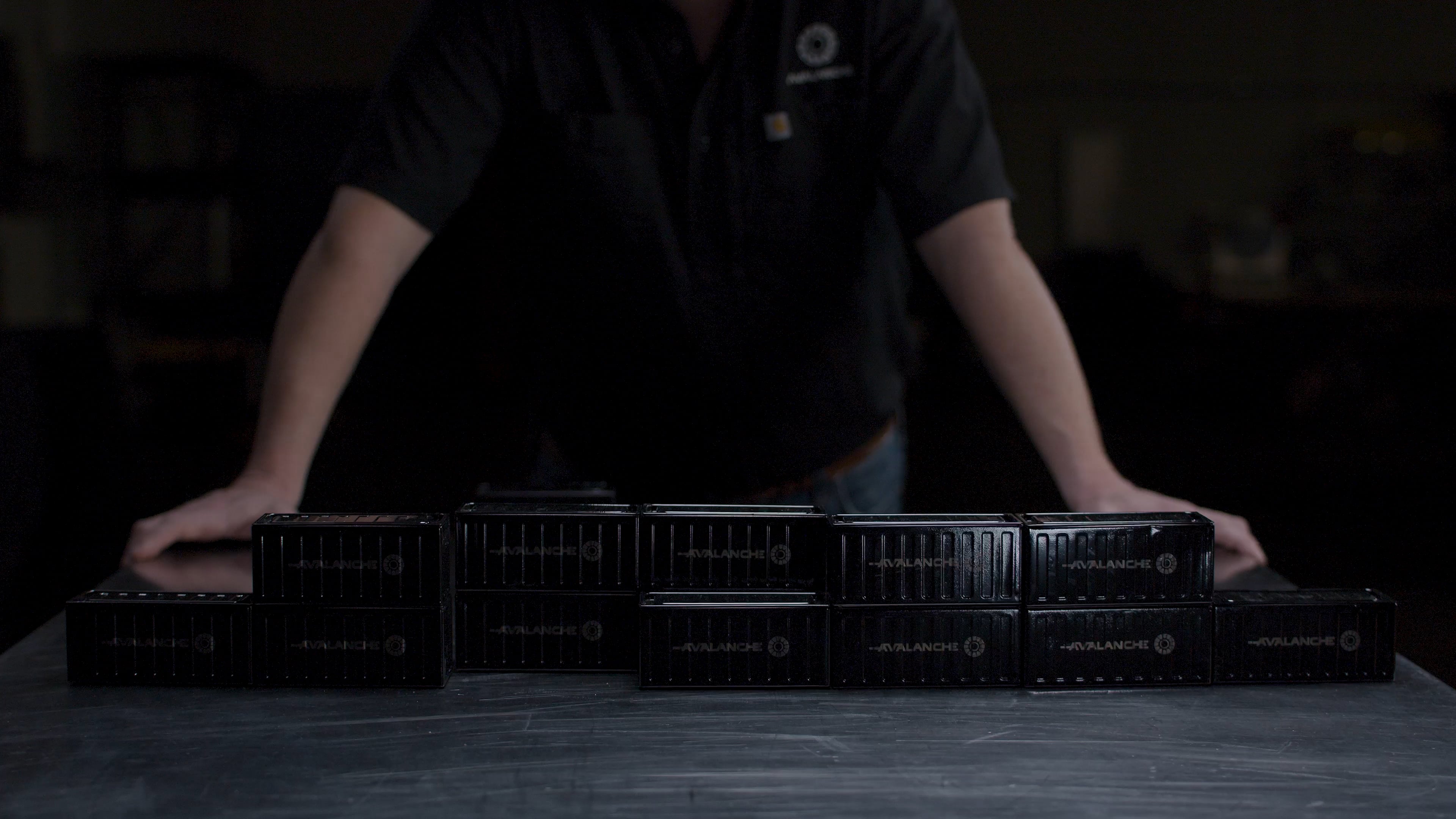
Fusion research explores many different ways to control plasma. Most approaches fall into familiar categories, such as large magnetic confinement systems or short bursts of compressed fuel. Avalanche is exploring a different path.
Fusion is simple to describe and difficult to do. At its core, fusion is the process of combining light atomic nuclei into a heavier one. When that happens, a small amount of mass turns into energy. The sun does this every second. On Earth, we are trying to do the same thing in a controlled way.
Avalanche builds compact fusion systems that generate a steady stream of high-energy neutrons. That matters because neutrons are not abstract physics. They are usable outputs. If you understand what a neutron does, you understand why fusion has commercial value before grid-scale power.
For decades, people have said the same thing: fusion is always thirty years away. The joke is familiar. It shows up in headlines, investor meetings, and dinner conversations. If fusion is so promising, why has it taken so long? The short answer is that fusion is genuinely difficult. The longer answer is worth understanding.
Fusion has been studied for more than seventy years. For most of that time, progress came slowly. Research was dominated by large national laboratories, massive facilities, and long development cycles. The physics advanced, but the systems were expensive and difficult to iterate. Over the last decade, several things have changed. None of them makes fusion easy. But together they change the pace at which fusion systems can be designed, tested, and improved.
Fusion systems are complex machines. Building a full reactor is expensive, time-consuming, and technically demanding. It is not practical to construct dozens of machines just to see what works. That is where simulation becomes essential.
Fusion development does not happen in a single step. A working power system requires solving multiple problems along the way. Each stage of development answers a specific technical question and builds confidence in the next stage.
When fusion reactions occur, high-energy neutrons are released. These neutrons interact with materials in ways that make them useful for research, medicine, and industry. This means fusion systems can create practical value even before reaching net energy production.
Q measures energy gain in the plasma. It is the ratio of fusion energy produced compared to the energy used to heat the plasma. Reaching Q greater than 1 means the plasma itself is producing net energy. But it does not automatically mean a fusion power plant is running.
Announcements often mention new experiments, upgraded machines, or improved performance. But without context, it can be hard to know what those updates actually mean. Engineers evaluate fusion systems using measurable signals. These signals show whether the machine is moving closer to conditions where fusion reactions become useful and sustainable.